

It was 5:47 PM. The office was finally quiet, but your mind wasn’t. Your shoulders felt like you’d been carrying a backpack filled with bricks all day.
Somewhere between answering that urgent email, sitting for long lectures, making a tough call, and skipping lunch, a slow, steady ache crept in, wrapping itself around your forehead like a too-tight headband.

You rub your temples and think, “I just need to rest. ”But deep down, you wonder… Is this just a regular headache, or is stress to blame?
Hmmmmmmmmmm Let’s go deeper.
1. What is a Headache? A headache is pain anywhere in the head, scalp, or neck.
It can be:
a) Primary headaches – Not caused by another health condition.
Examples:
-Tension headaches linked to stress or muscle strain.
-Migraines – throbbing, often one-sided, with nausea or light sensitivity.
-Cluster headaches – severe, one-sided pain around the eye, in cycles.

b) Secondary headaches – Caused by something else, such as:
-Sinus infection,
-Dehydration
-High blood pressure
-Eye strain
-Hormonal changes
Common headache triggers include:
-skipped meals,
-Lack of sleep
-poor posture
-screen overuse
-certain foods
-and even
weather changes.
2. The Stressache– When Stress Takes the Wheel
Stressache isn’t a medical word, but it perfectly describes that dull, pressure-like headache born out of mental or emotional strain. This time, people generally say, I’m streesed, I think it’s stress.
When you’re stressed: Your neck, scalp, and shoulder muscles tighten. Blood flow changes. Pain signals in your nerves get louder.
Typical stressache signs:
-Feels like a tight band squeezing your head.
-Pain is steady, mild to moderate.
-Often starts or worsens in the afternoon/evening.
-Can spread to the neck, back of the head, or behind
the eyes.

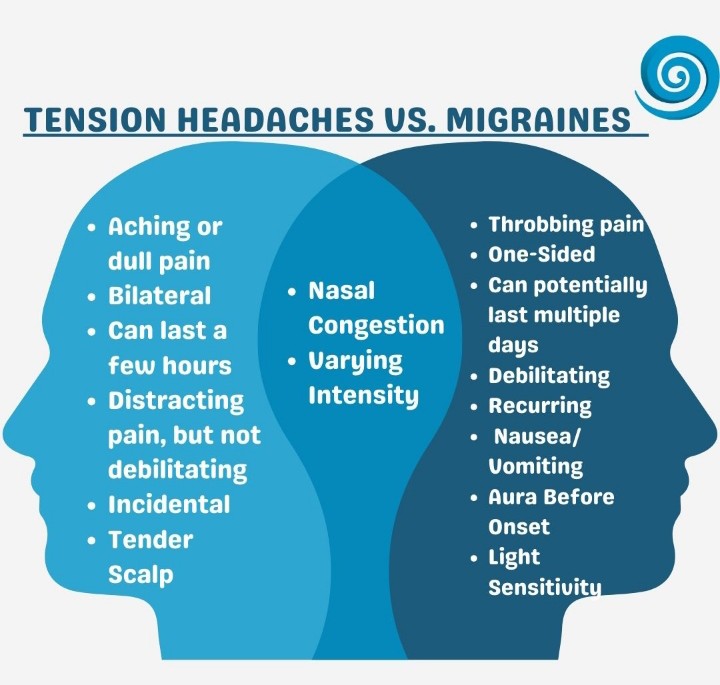
3. How to Tell the Difference.
Stressache vs Other Headaches
Stressache (Tension-type)
-Dull, tight, pressure-like pain
-Both sides of the head or across the forehead
-Mild to moderate, steady (not throbbing)
-Linked to stress, worse later in the day
-Neck/shoulder tightness, no nausea
–Other Headaches
-Migraine – Throbbing, one-sided, with nausea or light sensitivity
-Sinus – Face/forehead pressure, nasal congestion
-Cluster – Severe pain around one eye, cycles, eye redness
4.How to Break the Cycle.
Hydrate First: Dehydration worsens headaches. Drink water before coffee or painkillers.

-Stretch and Move Every hour, loosen your muscles. Roll your shoulders forward and back. Gently tilt your head from side to side. Rest Your Eyes.
-Follow the 20-20-20 rule: Every 20 minutes, look 20 feet away for 20 seconds.
-Breathe It Out: Use the 4-7-8 method: Inhale 4 seconds, hold 7 seconds, exhale 8 seconds.
-Get Good Sleep: Aim for 7–8 hours.

-Keep your sleep and wake time consistent.
-Manage Stress Before It Peaks by Journaling, prayer, walking, music, or meditation can lower muscle tension before it turns into pain.

5. When to Seek Medical Help
See a doctor if you experience:
-A sudden, severe headache (“worst headache of my life”).
-Headache after a head injury.
-Headache with fever, stiff neck, confusion, or vision problems.
-Headaches that keep getting worse or don’t go away with rest.

Final Thoughts
A headache is your body’s alarm. A stressache is your body’s gentle but persistent tap on the shoulder. Both are signs you need to slow down, breathe, and give your mind and body the rest they deserve.
So the next time that familiar ache creeps in, don’t just reach for painkillers, reach for water, a stretch, and a moment to just… be.
Your head and your peace of mind will thank you.
Tell me, how are you feeling today?
This is different from the norms right? August is for our health series don’t forget.
Till I drop my next post, stay chilled and love yourself more. ❤️ ✨️
Thank you for sharing this.
I learnt something thing today.
You too, till you drop your next post, stay chilled and love yourself more. ❤️ ✨️
You’re welcome Royalty 👑 💖